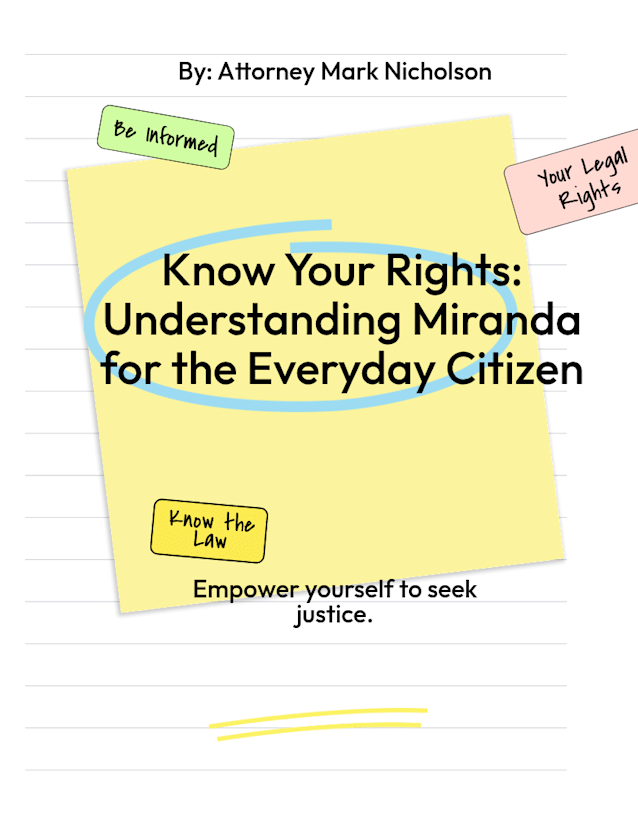
Know Your Rights: Understanding Miranda for the Everyday Citizen
About
What does it really mean when you hear, “You have the right to remain silent”?
In Know Your Rights: Understanding Miranda for the Everyday Citizen, attorney Mark Nicholson breaks down one of the most well-known—but widely misunderstood—legal protections in American law. Written in clear, accessible language, this book empowers everyday people to understand their rights, protect themselves during police encounters, and navigate the criminal justice system with confidence.
Miranda rights are more than a TV catchphrase. They can determine whether a statement is admissible in court, whether a case moves forward, and whether your constitutional protections are honored. Yet many people don’t know when these rights apply, when they don’t, or how easily they can be waived.
This practical guide explains Miranda rights from the ground up—without legal jargon—while also offering deeper insights valuable to students, professionals, and anyone interested in civil liberties.
Inside this book, you’ll learn:
- The real history and purpose behind Miranda v. Arizona
- When police are required to read your rights—and when they are not
- The difference between a stop, detention, and arrest
- What counts as custodial interrogation
- Common myths, misconceptions, and dangerous assumptions
- How silence is often misunderstood—and why it is not an admission of guilt
- The critical role of legal counsel and when to ask for a lawyer
- How Miranda rights apply in everyday situations like traffic stops and arrests
- The impact of media, public perception, and social media on your rights
- What happens when Miranda rights are violated—and what it means for your case
Written by practicing attorney Mark Nicholson, known as The Battery Man, this book blends legal accuracy with real-world perspective. Whether you are a concerned citizen, a student of the law, or someone who wants to be prepared before a police encounter ever happens, this guide offers clarity, empowerment, and peace of mind.
Knowledge is protection.
Understanding your rights is the first step toward defending them.